


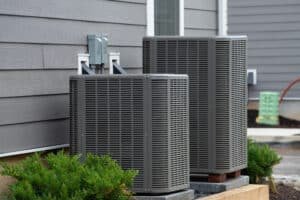
Most homes in Phoenix need an air conditioner that can cool between 3 and 5 tons. The air conditioner size for Phoenix homes is different for each house. It depends on the size of the house. It also depends on the insulation. The height of the ceiling is important too. How much sunlight the house gets is another factor. The number of windows in the house matters. The number of people living in the home is important as well. So air conditioner sizes, for Phoenix homes vary based on all these things.
Why AC Size Matters
The summers in Phoenix do not play nice.
When the temperature gets really hot and goes over 110 degrees Fahrenheit your air conditioning system is going to be working hard. If you get an air conditioning system that’s not the right size it is like trying to put out a big fire with a small garden hose.
Most people think that a big air conditioning system is the best. That is not true. The air conditioning system needs to be the size for your house so it can cool your house properly. The air conditioning system needs to be sized right for the cooling needs of your house.
AC Size Chart for Phoenix Homes
This chart provides a general starting point.
Home Size
Recommended AC Size
1,000–1,400 sq ft
2.5–3 Tons
1,400–1,800 sq ft
3–3.5 Tons
1,800–2,300 sq ft
3.5–4 Tons
2,300–2,800 sq ft
4–5 Tons
2,800+ sq ft
5 Tons or More
Think of this chart as a roadmap, not a final destination.
Every home has its own cooling story.
What Factors Affect AC Sizing?
Square footage is only one piece of the puzzle.
Several factors influence how much cooling power a home needs.
Sun Exposure
Homes facing direct afternoon sunlight often need additional cooling capacity.
Phoenix sunshine can turn walls and windows into giant heat collectors.
Insulation Quality
Good insulation helps keep cooled air inside.
Poor insulation lets valuable cooling escape through the attic, walls, and ceilings.
Ceiling Height
Higher ceilings create more space to cool.
More air volume usually means higher cooling requirements.
Windows and Doors
Large windows can increase indoor heat gain.
Older windows often allow more heat to enter the home.
Number of Occupants
People generate heat.
A busy household typically requires more cooling than a home occupied by one or two people.
What Happens If Your AC Is Too Small?
An undersized AC unit runs longer, struggles to maintain indoor temperatures, increases energy consumption, and experiences more wear and tear. During Phoenix heat waves, it may operate continuously without reaching the thermostat setting, leading to discomfort and higher utility costs.
A small unit works overtime.
It’s like asking a compact car to tow a heavy trailer up a mountain every day.
Eventually, performance suffers.
Components wear out faster and cooling becomes inconsistent.
What Happens If Your AC Is Too Large?
An oversized AC unit cools the home too quickly, cycles on and off frequently, wastes energy, creates uneven temperatures, and may increase equipment wear. Frequent cycling reduces efficiency and prevents the system from operating at its intended performance level.
Many homeowners think bigger means stronger.
In reality, bigger often means less efficient.
Short cycling prevents the system from running long enough to operate efficiently.
Why Professional Sizing Matters
A professional HVAC assessment removes guesswork.
Technicians perform a load calculation that evaluates your home’s unique characteristics.
This process measures cooling needs with precision.
It’s similar to getting a tailored suit instead of buying one off the rack.
The fit simply works better.
At AC Medics, we help homeowners throughout Phoenix and surrounding communities choose systems designed for Arizona’s demanding climate.
Expert Insights
Phoenix weather creates challenges that homeowners in cooler regions rarely face.
A system that performs perfectly in another state may struggle here.
When replacing an older unit, don’t assume the existing size is correct.
Many homes have systems that were oversized or undersized from the start.
A new load calculation helps ensure the replacement fits the home’s actual needs.
Statistics
-
- The U.S. Department of Energy reports that heating and cooling account for roughly 50% of energy use in many homes.
-
- Properly sized HVAC systems can improve efficiency and reduce unnecessary energy consumption.
-
- Phoenix regularly experiences summer temperatures above 100°F, placing significant demand on residential cooling systems.
FAQs
How many tons of AC do I need for a 2,000-square-foot home in Phoenix?
Most 2,000-square-foot homes in Phoenix require a 3.5 to 4-ton AC unit. Factors such as insulation, ceiling height, window efficiency, and sun exposure can affect the final recommendation, making a professional load calculation the most reliable method.
Can an AC unit be too big?
Yes. An oversized AC system can short cycle, waste energy, create uneven temperatures, and increase wear on components. Proper sizing improves comfort and system performance.
How long should a Phoenix AC unit last?
Most residential AC systems last between 10 and 15 years when properly maintained. Regular tune-ups and timely repairs help extend system life.
Conclusion
Choosing the right AC size isn’t about buying the biggest unit available.
It’s about finding the right fit for your home.
A properly sized system keeps your home comfortable, controls energy costs, and handles Phoenix heat without unnecessary strain.
When temperatures soar, the right AC size makes all the difference.
Leave a Reply